
AIR
Although we do not always pay attention to it, air directly influences the environment in which our plants live. Ventilation, ambient humidity, and air circulation can affect their leaves, roots, and resistance to certain diseases. Learn how to create a balanced environment where your plants can breathe, thrive, and stay healthy.

Refresh the air in your jungle.
A well-ventilated room helps prevent stagnant air and excessive humidity. However, be sure to protect the plants from hot or cold drafts that could stress them.

Leave space between the leaves.
Plants that are too crowded have less air circulation between their leaves. Spacing them out a bit can help the foliage dry better and reduce the risk of certain fungal diseases.
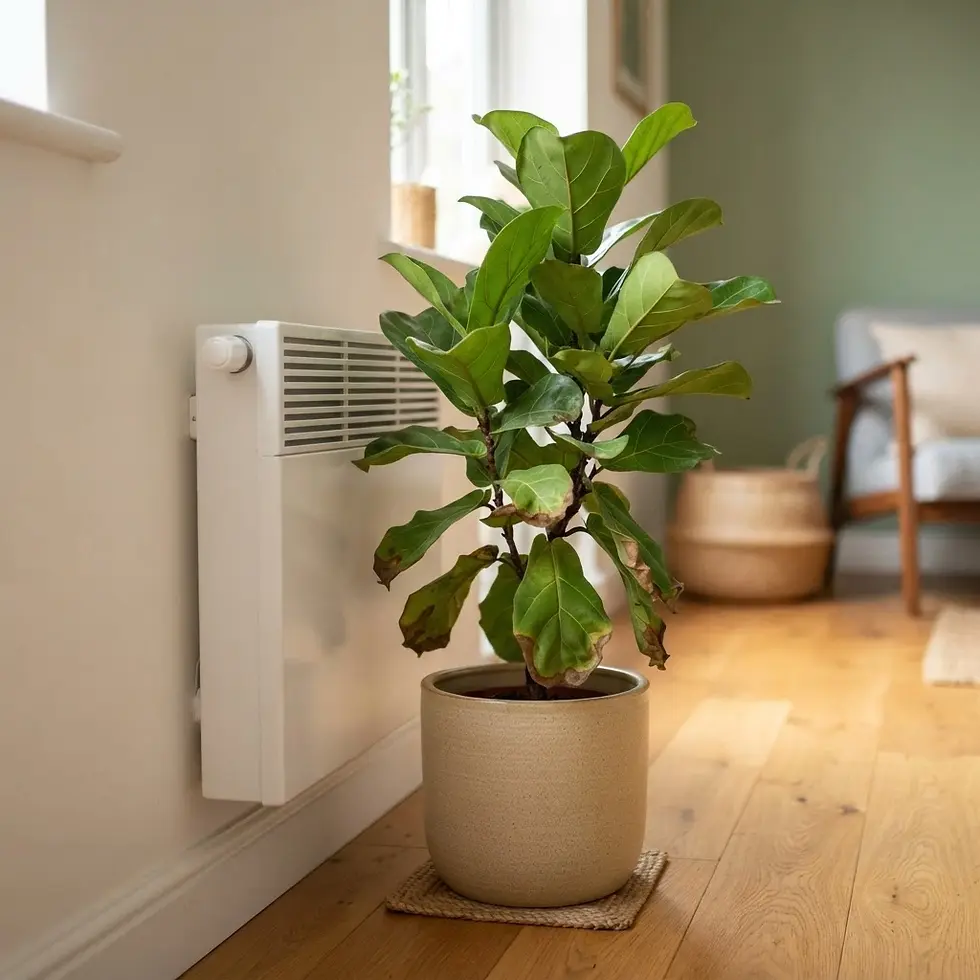
Avoid sudden temperature changes.
Plants also sense changes in their environment. Placing them near radiators, air conditioners, or drafty windows can cause stress and damage their leaves. Maintain a relatively stable temperature and adjust their placement to suit the needs of each species to promote healthy growth.